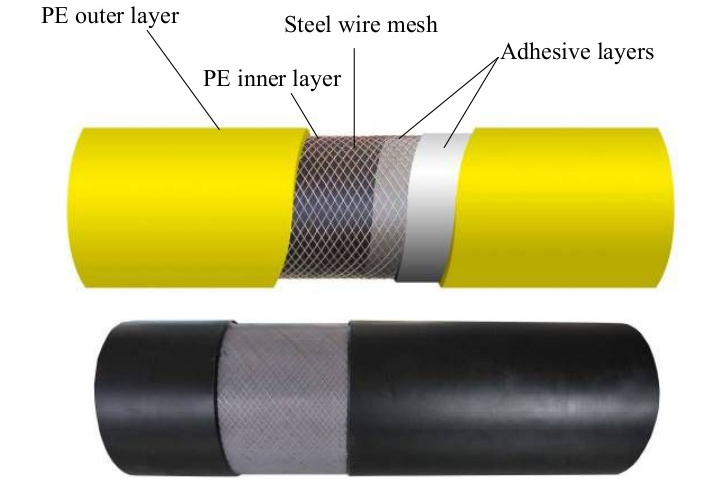
The PAT pipe is reinforced with a mesh frame made of high-strength steel wire, spirally twisted around it. The main raw material is modified flame-retardant and antistatic high-density polyethylene (HDPE). A high-performance resin binder is used to bond the steel wire to the inner and outer HDPE layers. This new type of mining product combines the advantages of steel and plastic pipes and is widely used in underground coal mines for water supply and drainage, slurry spraying, gas pumping, and wind pressure.
Share:
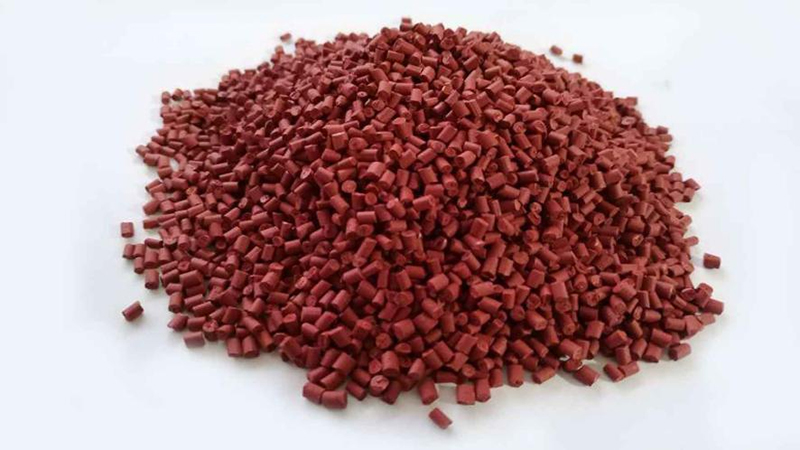
Key raw material for PAT pipelines
Flame retardant and antistatic technology
Four Key Technologies to Solve Coal Mining Industry Problems
1) Material modification technology ;
2) Steel-plastic composite technology ;
3) Sealed pipe connection technology ;
4 ) Intelligent pipeline network technology .
Productivity
● Nominal outside diameter of PAT
dn50 - dn1 0 00mm (see specification table)
● Nominal pressure of the PAT (the pipe has a threefold safety margin)
0.8 MPa - 10.0 MPa ( see specification table)Connection method
Connection Method
a) Pipeline with low pressure
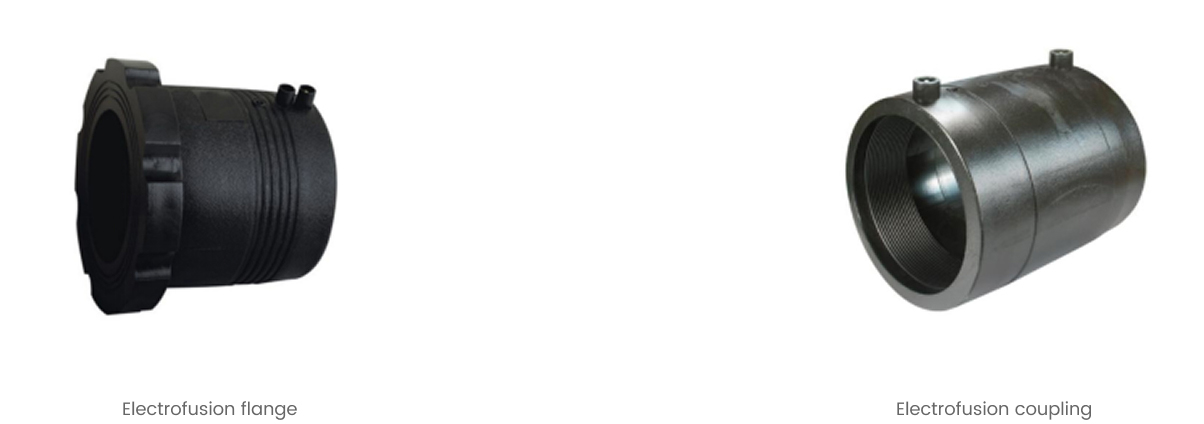
The working pressure is not higher than 4.0 MPa , there are two options for connection: electro-flange connection and electro-fusion connection ;
b ) High pressure pipeline pressure :
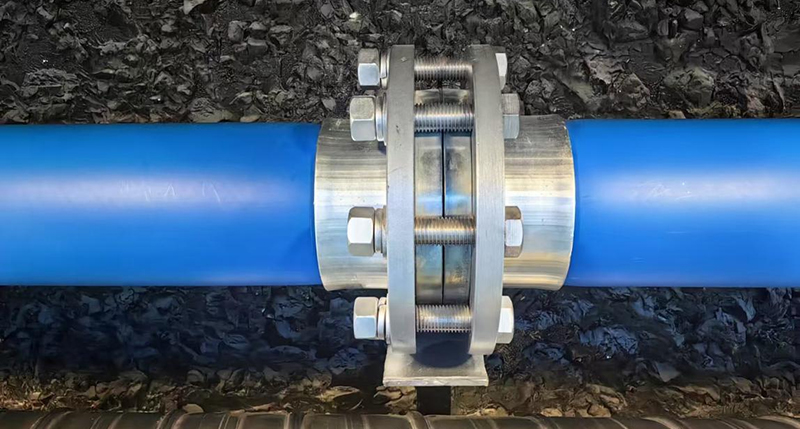
Working pressure above 4.0 MPa , use flange riveting connection with double compaction.
c) Use of quick-release couplings in accordance with working conditions
Technical Advantages
01
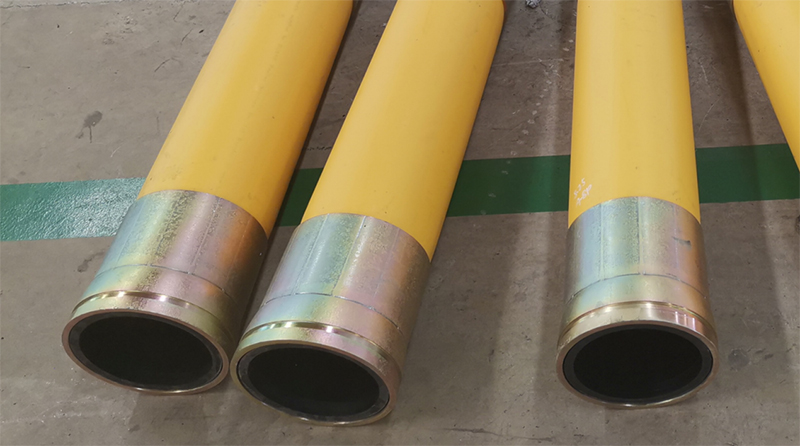
The end face of the seal and the pipeline are formed in one form, ensuring that the transport medium did not come into contact with the metal part of the pipe, completely eliminating the possibility of contact between the wire in the pipe and the transport medium.
02
The sealing plane and the pipeline have an angle of 90°, and a metal fastener is used, The end of the pipe is riveted using metal, which ensures the strength of the connection and increases the ability of the connection to withstand axial force.
03
Riveting technology so that the steel wire in the pipe to achieve mechanical connections, the overall strength of the pipe is guaranteed; wire displacement is avoided, and the pipeline cannot withstand the pressure.
04
A reinforced sealed gasket is used between the two ends of the pipeline. construction, and the locking ring on the riveted double seal holds sealing gasket, avoiding the possibility of extrusion of the sealing gasket due to excessive pressure.
Pipe Strength Test
|
Test type |
Temperature test/℃ |
trial pressure/MPa |
Time tests/h |
Requirements for productivity |
|
Hydrostatic strength |
20 |
2× PN |
1 |
Without a break no leakage |
|
60 |
1.2×PN |
165 |
Without a break, no leakage |
|
|
60 |
1.1×PN |
1000 |
Without a break, no leakage |
|
|
Discontinuous pressure |
20 |
Continuously increase the pressure until the sample ruptures. |
≥3PN |
|
* All products meet quality control requirements with a minimum safety margin 3. (Not less than three times the safety margin).
Pipeline Design

Fig. 1 Two-layer reinforced layer Fig. .2 Multilayer reinforced layer
Description:
1. Polyethylene inner layer
2. Specialized adhesive-r alloy
3. Steel wire mesh with winding
4. Polyethylene outer layer
Table - Wire Mesh
|
Nominal external diameter ( dn ) |
50-200 |
225-500 |
560-630 |
710-1 2 00 |
|
Minimum diameter frame(d) |
0.5 |
0.8 |
1.0 |
1.1 |
|
Winding angle |
55°≤α≤60.0° |
|||
|
Winding direction |
LEFT + RIGHT |
|||
Technical Characteristics Of The Pipeline
a) High strength:
Polyethylene and coated steel wire are made of special modified
materials with a composite strength of ≥15 N/mm, resistance to hydraulic shock;
b) Good resistance to deformation:
It has excellent ability to resist foundation settlement and the pipeline is not
leaks or does not break under a certain bend when it is pressure-resistant;
c) Safe and secure connection:
The pipeline usually uses electrofusion and mechanical connections, and the strength
interface is higher than the strength of the pipeline itself, which can adapt to
needs of use in various application environments;
d) Low total project cost:
It can be built outside the pipe trench to reduce excavation work and
cost of the excavation project; the pipe is lightweight and is not very dependent on large dimensions
equipment;
d) Cost-effective pipeline:
The pressure in the pipes is mainly dependent on the steel wire and reduces consumption
polyethylene raw materials, and the advantage in pipeline cost is obvious.